How Hidden Roof Leaks Attract Termites to Your Home

Plumbing Noises Explained and What Your Pipes Are Saying
October 9, 2026
How to Reduce Rain Noise & Heat Under Metal Deck Roofing in Malaysia
October 23, 2026How Hidden Roof Leaks Attract Termites to Your Home

A home's roof is its first line of defense against the elements. It shields the interior from rain, wind, and sun, preserving the structural integrity of the entire property. However, when a roof develops a hidden leak, it creates a cascade of problems that go far beyond a simple water stain on the ceiling. Many homeowners are unaware that a small, unnoticed leak can quickly become a major invitation for destructive pests. Termites are drawn to moisture, and a leaking roof provides the perfect, dark, and damp environment for a colony to thrive. By the time the damage is visible, it is often too late.
This is why understanding the link between roof leaks and termites is crucial for protecting your property and ensuring long-term safety. A proactive approach to roof maintenance helps identify potential moisture issues before they become a haven for pests, allowing homeowners to take preventive action through proper repairs and treatment. In this comprehensive guide, we will explore exactly how hidden roof leaks attract termites, the warning signs every homeowner should know, and the steps you can take to protect your most valuable investment.
A professional roof and pest assessment helps identify potential hazards before they become dangerous, allowing property owners to take preventive action through proper roof repair, moisture control, or termite treatment when necessary.
What Is the Connection Between Roof Leaks and Termites?
A roof leak and a termite infestation are a dangerous combination. The relationship is simple: water creates moisture, and moisture creates the ideal habitat for termites. Termites are constantly on the lookout for damp, soft wood, and a leaking roof provides a steady, hidden supply of moisture that can go undetected for months. Unlike many other pests, termites do not need to venture into the open to find food. They can enter a home through tiny cracks in the foundation, travel through wall voids, and find their way to the water-damaged wood beneath a leaking roof.
During a professional assessment, trained specialists examine various factors, including:
- Roof decking condition
- Attic ventilation and humidity levels
- Insulation moisture content
- Wood framing integrity
- Signs of fungal growth or mold
- Existing water stains and discoloration
- Gutter functionality and drainage
- Surrounding tree branches and vegetation
- Flashing and sealant condition
- Presence of mud tubes or frass
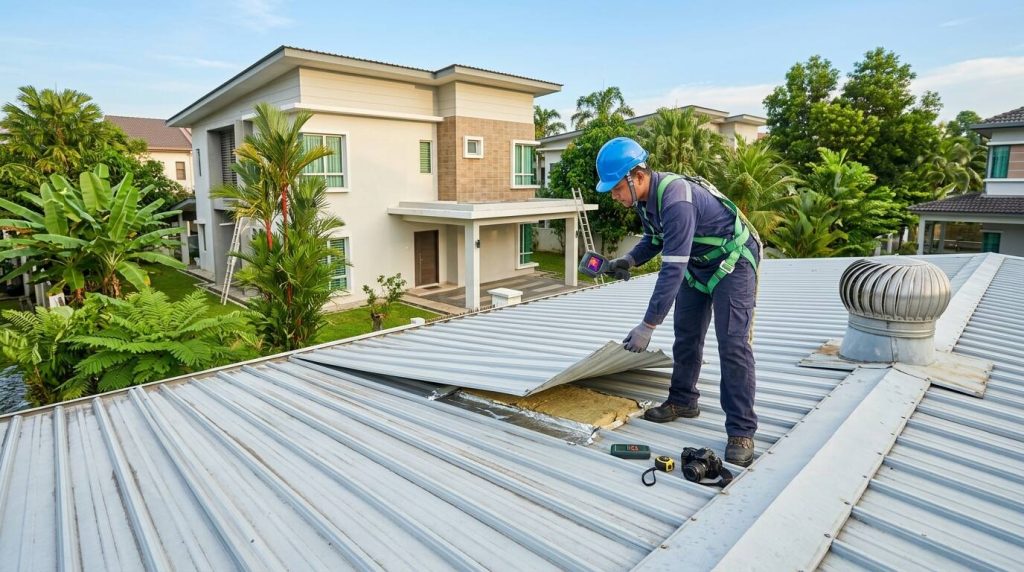
The goal is to determine whether a roof leak has created an environment where termites can survive and breed. A professional inspector will use specialized tools such as moisture meters, infrared cameras, and borescopes to detect hidden leaks and termite activity that would otherwise remain invisible to the untrained eye.
Why Hidden Leaks Are a Major Risk
Not every roof leak is obvious. Many go unnoticed for months because water travels along rafters and insulation, only appearing far from the entry point. A small crack in flashing or damaged shingle lets water seep into the attic, saturating wood, insulation, and drywall—creating a damp environment ideal for termites, mold, and rot.
Some leaks stay hidden until a professional uses specialized equipment to detect them. By then, damage may have spread throughout the structure, requiring extensive repairs.
Regular roof inspections help property owners:
- Detect hidden water intrusion
- Prevent wood rot and decay
- Reduce the risk of termite infestations
- Protect structural framing
- Improve indoor air quality
- Plan future roof repairs
- Avoid costly emergency repairs
- Maintain property value
Early detection often prevents costly emergency situations and can save homeowners thousands of dollars in structural repairs and pest control treatments.
Identifying Hidden Roof Leaks
Professional inspections can identify problems that are difficult to detect without proper training. Many homeowners only discover a roof leak when they see a brown stain on the ceiling or notice a musty smell in the attic. However, by that point, the leak has likely been present for weeks or even months, and termites may already have established a colony.
Common hidden leak indicators include:
- Dark spots or water stains on ceilings and walls
- Peeling paint or bubbling wallpaper
- Musty or earthy odors in the attic
- Sagging or soft roof decking
- Damp or compressed insulation
- Cracked, curled, or missing shingles
- Rusted nails or corroded flashing
- Increased energy bills due to wet insulation
- Visible mold or mildew growth
- Dripping sounds during rain
These issues may significantly weaken a home even if the roof appears intact from the outside. A professional roof inspection can pinpoint the exact source of the leak and assess the extent of the damage, including whether termites have already begun to feed on the wet wood.
Protecting Your Home from Termites and Water Damage
Roofs protecting homes, offices, and public spaces require regular monitoring, especially in areas prone to heavy rain or humidity. Without proper inspections, hidden leaks may cause:
- Termite infestations
- Structural wood rot
- Mold and mildew growth
- Ceiling collapses
- Damaged insulation
- Electrical hazards
- High repair costs
- Reduced property value
Professional assessments help reduce these risks by recommending appropriate maintenance before pests and decay take hold. A comprehensive inspection will not only identify the leak but also evaluate the extent of termite activity and provide a plan for remediation.
Supporting a Healthy Home Environment
Roof inspections and termite control are not only about identifying active problems. They also help improve the overall health of your home. A dry, well-maintained home is generally stronger, safer, and more resistant to pests and disease.
Specialists may recommend:
- Roof repairs and sealing
- Gutter cleaning and maintenance
- Attic ventilation improvements
- Moisture barriers and vapor retarders
- Termite baiting systems
- Wood treatment and replacement
- Dehumidification in crawl spaces
- Regular monitoring and follow-up inspections
By addressing moisture issues and eliminating termite food sources, homeowners can create an environment that is inhospitable to pests while preserving the structural integrity of their home.
The Importance of Regular Roof Maintenance
Routine maintenance works together with inspections to improve long-term safety. A well-maintained roof is less likely to develop leaks, and if a leak does occur, it is more likely to be caught early before termites can cause significant damage.
Services may include:
- Roof leak repair
- Shingle replacement
- Flashing repair and resealing
- Attic insulation checks
- Pest control treatments
- Gutter cleaning and repair
- Roof coating applications
- Ventilation improvements
Regular maintenance reduces unnecessary stress on your home and helps extend the lifespan of your roof. It also provides an opportunity for professionals to spot early signs of termite activity before it becomes a full-blown infestation.
Why Storm Damage Increases Termite Risks
Heavy rain, strong winds, and thunderstorms can damage roofs even when the damage is not immediately visible. Storms may cause:
- Cracked or missing shingles
- Lifted or damaged flashing
- Clogged gutters and downspouts
- Roof punctures from debris
- Water intrusion around chimneys and vents
- Saturated attic insulation
A professional inspection after severe weather helps identify hidden damage before it becomes a termite haven. Storm-damaged roofs are particularly vulnerable because water can enter through small openings that are difficult to see from the ground. If left unrepaired, these openings allow moisture to accumulate in the attic and wall cavities, creating the perfect conditions for termites.
When Should a Roof and Termite Assessment Be Performed?
Property owners should consider scheduling an assessment when:
- Roof leaks are suspected
- Ceiling stains or water marks appear
- Attic smells musty or damp
- Wood feels soft or spongy
- Mud tubes are visible on foundations or walls
- Severe storms have passed through the area
- Roof age exceeds 10-15 years
- You are purchasing a new home
- You notice discarded wings or frass near windows
Regular inspections are especially important for older homes located in high-humidity areas. In regions with warm, moist climates, termites can be active year-round, making routine inspections essential for early detection and prevention.
Choosing a Professional Roof and Pest Control Company
When selecting a service provider, consider companies that offer:
- Experienced roof inspectors
- Comprehensive termite inspections
- Professional repair services
- Safe and effective chemical treatments
- Emergency services
- Proper equipment and technology
- Safety-focused work practices
- Licensed and insured technicians
- Written reports and recommendations
- Follow-up maintenance plans
Working with experienced professionals helps ensure your home is managed safely and responsibly. Look for companies with positive reviews, proper certifications, and a proven track record of protecting homes from both roof leaks and termite infestations.
Conclusion
Professional roof and termite assessments are an essential part of responsible home maintenance. They help identify hidden leaks, improve roof health, and reduce the risk of infestations before they occur.
Whether for residential homes, commercial buildings, or public spaces, regular assessments provide valuable information that supports safer structures and healthier living environments. Combined with professional repairs and pest control services when necessary, these assessments help protect both people and property while preserving the long-term value of your home.
Hidden roof leaks are more than just a nuisance—they are a direct invitation to termites and other destructive pests. By staying vigilant, scheduling regular inspections, and addressing moisture issues promptly, homeowners can protect their properties from the silent damage that termites and water can cause. Remember, the best defense against termites is a dry, well-maintained home.
FAQs
1. What is the connection between roof leaks and termites?
Roof leaks introduce moisture into wood structures, creating the damp environment termites need to survive. Subterranean and drywood termites are especially attracted to water-damaged wood, and a persistent leak can turn an attic or wall cavity into a thriving termite habitat.
2. How quickly can termites find a roof leak?
Termites can detect moisture within days. If the wood remains damp, a colony can establish itself within weeks, especially in warm, humid climates. The sooner a leak is repaired, the lower the risk of infestation.
3. Can a healthy-looking roof still have a leak?
Yes. Some leaks start small and travel along rafters, showing no visible signs on the ceiling. Professional moisture detection is often required to find them. Regular inspections can catch these hidden leaks before they attract termites.
4. When should I arrange a professional roof and termite inspection?
You should consider an assessment if you notice ceiling stains, musty odors, soft wood, or mud tubes. Regular annual inspections are also recommended, especially for older homes or those in high-humidity areas.
5. What happens after a roof and termite assessment?
After the inspection, the specialist will explain the condition of your roof and any pest activity. Depending on the findings, this may include roof repairs, termite tree.