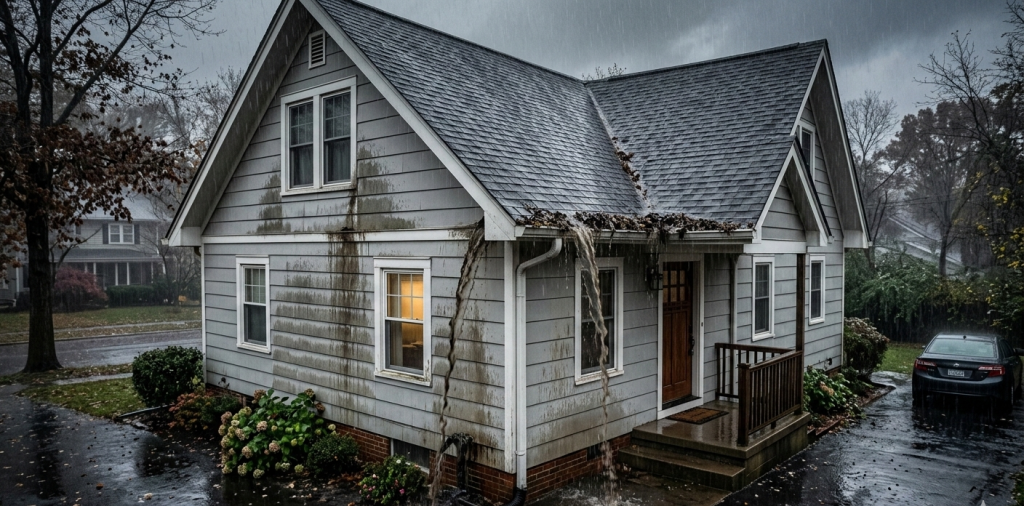
Roof Flashing Failure: Why It Causes Hidden Roof Leaks

What Happens When a Small Roof Leak Is Left Unrepaired
February 16, 2026
How Poor Gutter Maintenance Can Damage Your Roof and Walls
March 2, 2026Roof Flashing Failure: Why It Causes Hidden Roof Leaks

Introduction
Roof flashing failure is one of the most common causes of hidden roof leaks in residential homes. Many homeowners only discover the problem after ceiling stains, damp walls, or mold growth appear. Flashing plays a critical role in sealing roof joints, yet it is often overlooked until serious damage occurs.
When flashing fails, water can seep into areas that are difficult to detect, leading to costly repairs if left untreated. Understanding how flashing works, why it fails, and when to seek professional roofing services can help prevent long-term structural damage.
What Is Roof Flashing and Why It Matters
Roof flashing is a thin material, usually metal, installed around roof joints, chimneys, vents, skylights, and valleys. Its purpose is to direct water away from vulnerable areas and prevent moisture from entering the roof structure.
When installed correctly, flashing acts as a protective barrier. However, even a small failure can allow water to penetrate beneath shingles or tiles. Over time, this trapped moisture can weaken timber, insulation, and ceiling boards.
Many homeowners assume roof leaks come from broken tiles alone. In reality, flashing failure is often the hidden cause, especially in homes that appear visually intact from the outside.
Common Causes of Roof Flashing Failure
Roof flashing does not fail overnight. Several factors contribute to its deterioration, including:
-
Improper installation during initial roof work
-
Aging materials that corrode or crack over time
-
Poor sealing around joints and edges
-
Roof movement due to temperature changes
-
Low-quality materials used in earlier repairs
As roofs expand and contract, flashing can loosen or pull away from surfaces. Once gaps form, water finds its way in — often without immediate visible signs.
This is why professional inspection is essential, especially for older roofs or properties that have undergone renovations.
Signs Your Home May Have Hidden Roof Leaks
Hidden leaks caused by flashing failure often show subtle warning signs before major damage occurs. Homeowners should watch for:
-
Water stains on ceilings or walls
-
Bubbling or peeling paint
-
Musty odors inside rooms
-
Mold growth near roof edges
-
Damp insulation in the attic
These symptoms may appear far from the actual leak source, making DIY detection difficult. Ignoring early signs can lead to rot, electrical hazards, and expensive ceiling repairs.
Why Roof Flashing Repairs Should Be Handled by Professionals
Roof flashing repair requires technical knowledge and proper safety equipment. Incorrect fixes can worsen the problem or create new leak points.
Professional roofing specialists:
-
Identify the true leak source
-
Use correct flashing materials
-
Apply proper sealing techniques
-
Ensure long-term water protection
Temporary fixes may stop leaks briefly, but only professional repair ensures durability and compliance with roofing standards.
Conclusion: Protect Your Home Before Damage Spreads
Roof flashing failure is a silent issue that can cause serious damage if ignored. Early detection and professional repair help protect your home, prevent mold growth, and avoid costly structural repairs.
If you notice signs of hidden roof leaks or suspect flashing problems, contact a professional roofing service to inspect and repair the issue before it escalates.
FAQs
What happens if roof flashing is not repaired?
Unrepaired flashing can lead to water damage, mold growth, timber rot, and ceiling collapse.
Can flashing leaks occur without heavy rain?
Yes. Moisture can enter gradually through failed flashing even during light rain or humidity.
How long does roof flashing last?
Flashing lifespan depends on material quality and installation, but typically ranges from 15–30 years.
Is flashing replacement expensive?
Costs vary, but early repair is far cheaper than repairing ceiling or structural damage.