Why Ceiling Leak Repair Should Not Be Delayed

Plumbing Pipe Leaks in Homes: Early Warning Signs You Should Not Ignore
May 12, 2026
Why Polycarbonate Roofing Is Popular for Modern Homes
May 28, 2026Why Ceiling Leak Repair Should Not Be Delayed

Ceiling leaks are one of the most common problems faced by homeowners, especially during heavy rain or long periods of wet weather. While some people assume the issue is only caused by plumbing problems, many ceiling leaks actually begin with hidden roof damage that gradually worsens over time.
In many cases, roof damage allows rainwater to enter the property through cracks, broken roofing materials, or damaged waterproofing layers. Once water penetrates the roof structure, it slowly travels through ceilings and walls before becoming visible inside the home. Because of this, ceiling leaks are often signs of deeper roofing problems that should not be ignored.
Understanding how roof damage causes ceiling leaks can help homeowners identify problems earlier and prevent more expensive structural repairs in the future.
Why Roof Damage Leads to Ceiling Leaks
A roof acts as the main protective barrier against rain, heat, and environmental exposure. However, over time, roofing materials naturally weaken due to aging, weather conditions, and continuous exposure to moisture and sunlight.
When the roof structure becomes damaged, water can seep through small openings and travel beneath roofing layers. Instead of dripping immediately, the water may spread slowly across beams, insulation, and ceiling surfaces before signs of leakage become visible inside the property.
Because water can travel far from the original entry point, the actual roof damage is sometimes difficult to identify without proper inspection.
Common Types of Roof Damage That Cause Ceiling Leaks
Cracked or Broken Roof Tiles
Roof tiles may crack or shift due to age, weather exposure, falling debris, or poor installation work. Even small cracks can allow rainwater to enter the roofing structure.
During heavy rain, water can flow beneath damaged tiles and slowly penetrate ceiling areas below. Over time, this may cause visible ceiling stains, peeling paint, and moisture buildup.
Damaged Roof Waterproofing
Roof waterproofing layers are designed to prevent water penetration. However, waterproofing materials can deteriorate over time due to heat, UV exposure, and heavy rainfall.
Once waterproofing protection weakens, water can slowly seep into the roof structure and eventually cause ceiling leakage problems inside the home.
Blocked Gutters and Drainage Systems
Blocked gutters are another common cause of roof-related ceiling leaks. Leaves, dirt, and debris can prevent rainwater from draining properly.
When water overflows from clogged gutters, it may enter roof edges and ceiling areas, especially during storms or prolonged rainfall. This can eventually damage ceilings, walls, and surrounding roofing materials.
Rusted Metal Roofing
Metal roofs may develop rust or corrosion after years of exposure to rain and humidity. Small rust holes can gradually become larger and allow water to pass through the roof surface.
If left untreated, rust damage may spread across larger roof sections and increase repair costs significantly.
Damaged Roof Flashing
Roof flashing is installed around roof joints, chimneys, vents, and edges to prevent water entry. When flashing becomes loose, cracked, or damaged, water can enter vulnerable areas of the roof structure.
This is a common source of hidden ceiling leaks because water often spreads internally before becoming visible indoors.
Warning Signs of Ceiling Leaks Caused by Roof Damage
Water Stains on Ceilings
Brown or yellow water stains are among the earliest warning signs of moisture entering the ceiling structure.
These stains often expand gradually over time if the roof problem is not repaired.
Peeling Paint or Bubbling Surfaces
Moisture trapped inside ceiling materials may cause paint to peel, bubble, or crack.
This usually indicates ongoing water penetration from the roof.
Mold and Musty Smells
Roof leaks create damp conditions that encourage mold growth inside ceilings and walls.
A persistent musty smell may indicate hidden moisture problems even if visible water damage is not obvious.
Dripping Water During Rain
Active dripping during heavy rain is a strong sign that roof damage has already become severe.
Immediate inspection is recommended to prevent structural damage.
Why Ceiling Leaks Should Never Be Ignored
Some homeowners delay repairs because ceiling leaks appear minor at first. However, water damage can spread quickly and affect multiple parts of the property over time.
Untreated leaks may eventually lead to:
- weakened ceiling structures
- damaged electrical wiring
- mold growth
- damaged furniture and flooring
- expensive structural repairs
Long-term moisture exposure may also reduce indoor air quality and create unhealthy living conditions.
How Professionals Identify Roof Leak Problems
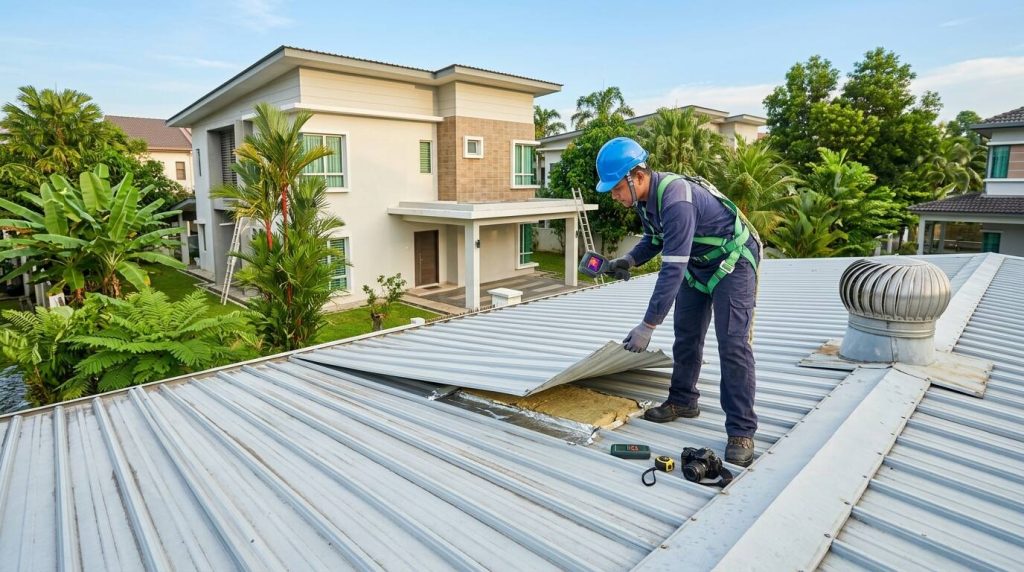
Professional roofing specialists use inspection methods to locate hidden roof damage accurately.
This may include:
- roof surface inspection
- waterproofing assessment
- gutter condition checks
- moisture detection
- ceiling damage evaluation
In some cases, water testing may also be performed to identify leak entry points.
Proper inspection is important because visible ceiling damage may not match the actual roof problem location.
Ceiling Leak Repair Solutions
Roof Tile Replacement
Broken or cracked roofing materials are replaced to restore water protection.
Waterproofing Repair
Damaged waterproofing layers may be repaired or replaced to prevent future leaks.
Gutter Cleaning and Repair
Blocked or damaged gutters are cleaned and repaired to improve rainwater drainage.
Roof Flashing Replacement
Loose or rusted flashing components are repaired to seal vulnerable roof joints.
Ceiling Restoration
After fixing the roof problem, damaged ceilings may require repainting or replacement of affected materials.
How to Prevent Roof-Related Ceiling Leaks
Preventive maintenance helps reduce the risk of serious roof damage and ceiling leaks.
Homeowners should:
- inspect roofs regularly
- clean gutters frequently
- repair damaged tiles early
- monitor ceiling stains
- schedule professional roof inspections
Regular maintenance is especially important in Malaysia due to heavy rainfall and humid weather conditions.
Benefits of Early Roof Leak Repair
Repairing roof damage early helps:
- reduce repair costs
- prevent structural damage
- improve home safety
- protect indoor property
- extend roof lifespan
Early maintenance also helps homeowners avoid larger renovation expenses in the future.
Conclusion
Ceiling leaks are often warning signs of hidden roof damage that should never be ignored. Problems such as broken roof tiles, damaged waterproofing, clogged gutters, and rusted roofing materials can all allow water to enter the property.
Without proper repair, small roof leaks may eventually lead to serious ceiling damage, mold growth, and costly structural issues. Early inspection and professional repair services are the best ways to protect homes from long-term water damage.
Proper roof maintenance not only improves safety but also extends the lifespan of the entire roofing system.
More Info
- https://www.kyroofingplumbing.com/tips/
- https://www.kyroofingplumbing.com/
- Home moisture and mold information
https://www.epa.gov/mold
FAQs
1. Can roof damage cause ceiling leaks?
Yes. Damaged roofing materials and waterproofing systems can allow rainwater to enter ceilings.
2. What are the first signs of ceiling leaks?
Water stains, peeling paint, and moldy smells are common early signs.
3. Are ceiling leaks dangerous?
Yes. They may damage structures, electrical systems, and indoor air quality.
4. Can blocked gutters cause ceiling leaks?
Yes. Overflowing gutters may allow water to enter roof edges and ceiling areas.
5. When should I call a roofing professional?
You should contact a professional if leaks happen repeatedly or after heavy rain.